
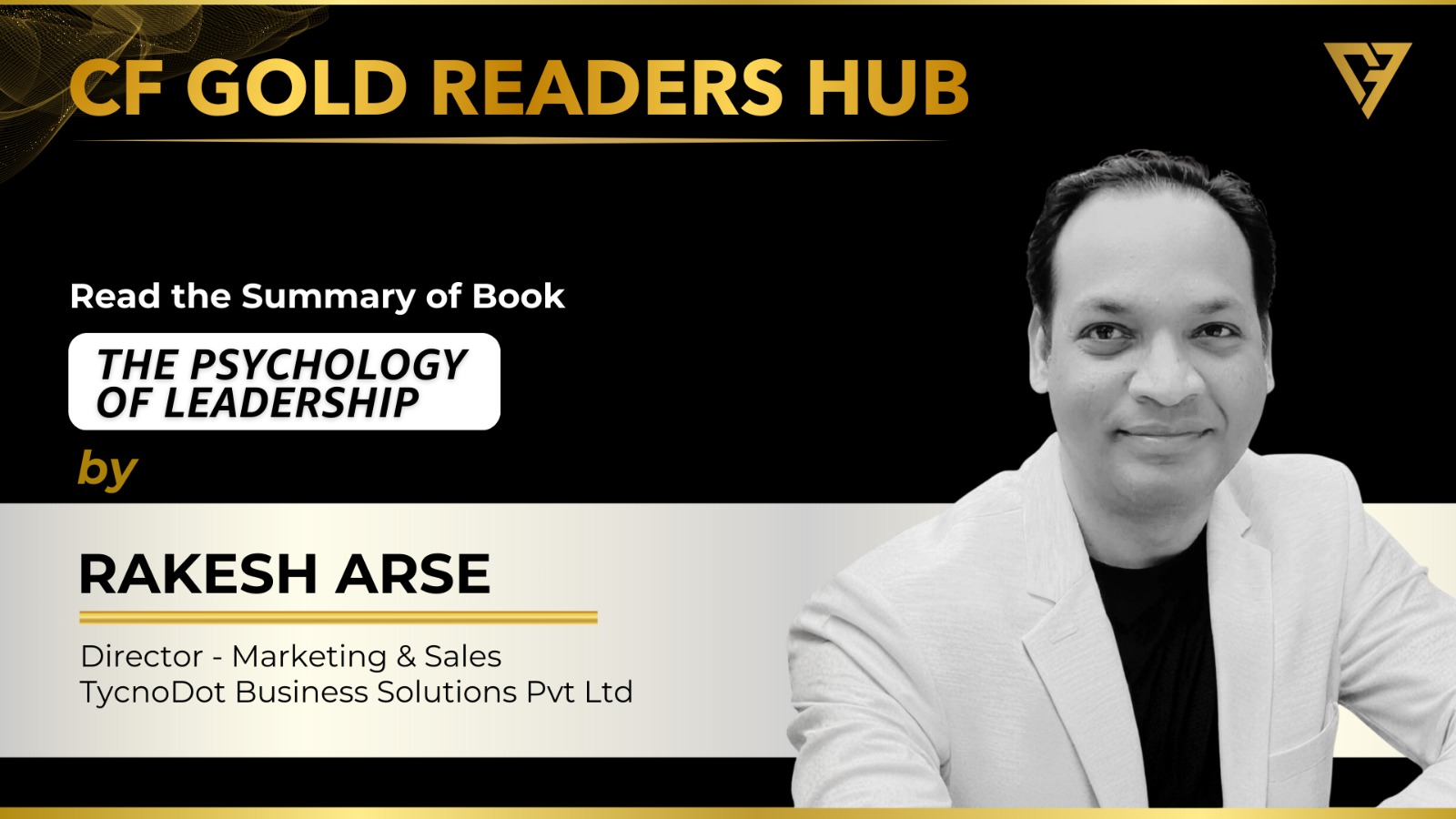
Blog Summary on "The Psychology of Leadership" by Rakesh Arse
Book Overview
In the realm of leadership, it’s important to remember that true influence isn’t about titles or authority. Instead, effective leadership is rooted in connection, purpose, and the ability to inspire others. In “The Psychology of Leadership,” Sebastian delves deep into what drives successful leaders by examining the interplay of mindset, emotional intelligence, and human behavior. This book highlights that leadership is more about a mindset than a position – it’s fundamentally tied to our emotions and interactions with others.
The Leader’s Mindset –
At the heart of great leadership lies self-awareness. Exceptional leaders understand their strengths, weaknesses, and emotional triggers. According to Sebastian, a leader’s true potential comes from their mindset-specifically, how it shapes their approach to challenges. Embracing a growth mindset-the belief that skills can be developed-fosters adaptability and innovation. Leaders who embody curiosity, openness, and resilience are better equipped to navigate uncertainty and inspire confidence, even in tough times.

Emotional Intelligence: The Key to Leadership –
Emotional intelligence (EQ) is vital for effective leadership. Sebastian breaks EQ down into four key components: self-awareness, self-regulation, empathy, and social skills. Leaders with high EQ are adept at managing their emotions, building deep connections, and fostering trust. Empathy, in particular, is a powerful tool; it allows leaders to influence others by making them feel understood and valued. Sebastian emphasizes that EQ is not fixed; it evolves through reflection, feedback, and life experiences.
Motivation and Influence –
Motivation is the driving force behind performance. While rewards can encourage effort, genuine motivation stems from a sense of purpose. When leaders connect daily tasks to a larger vision, they ignite passion and loyalty among their teams. Drawing on motivational psychology, Sebastian identifies autonomy, recognition, and shared goals as key drivers of engagement. He posits that influence is not about control but about guiding others through trust and inspiration.
Building Trust –
Trust is an essential currency for leaders. Without it, progress stalls. Sebastian categorizes trust into three pillars: competence, consistency, and character. Competence earns respect, consistency fosters reliability, and character builds loyalty. Leaders who demonstrate integrity, admit their mistakes, and follow through on promises create a psychologically safe environment where team members feel free to share ideas, take risks, and innovate.

Decision-Making and Judgment –
Effective leadership hinges on making clear and confident decisions. Sebastian explores how emotions and biases can cloud judgment and advises leaders to balance intuition with rational thought. By recognizing biases like overconfidence and confirmation bias, leaders can maintain objectivity. Involving diverse perspectives in decision-making not only improves outcomes but also enhances team buy-in.
Communication That Connects –
Communication is a powerful tool that turns vision into action. Sebastian asserts that effective leaders don’t just communicate – they connect. They listen attentively, convey their messages clearly, and adapt their communication style to resonate with their audience. Non-verbal cues such as tone, timing, and body language are just as impactful as the words spoken. When communication is grounded in honesty and shared values, it becomes a formidable means to align teams and drive progress.
Leading Through Change –
Leadership is often a test of character. People resist change not because they oppose progress, but because they fear loss. Sebastian explains that leaders can facilitate smoother transitions by being transparent, empathetic, and inclusive. He emphasizes the importance of creating a psychologically safe environment where team members can ask questions, experiment, and learn from failures. Such environments nurture innovation and resilience.
Fostering Leadership in Others –
Great leaders don’t just lead; they inspire leadership in others. According to Sebastian, leadership is not a solo endeavor but a chain reaction. By mentoring, coaching, and empowering others, leaders cultivate a culture of growth. Developing future leaders involves nurturing a mindset of integrity and emotional strength, rather than just focusing on technical skills. Leaders who uplift those around them create enduring organizations that thrive on collaboration and shared success.
In conclusion, Sebastian reminds us that leadership is fundamentally about people, not power. It’s about building trust, motivating others, and guiding teams toward a shared vision that transcends individual ambitions. In a rapidly changing world, understanding the psychology of leadership empowers individuals to not only lead but also to transform their environments for the better.
📢 Want to be featured? Fill out the form and let us showcase your journey!