
Why Most Organizations Fail at Implementing Security Strategies
Introduction
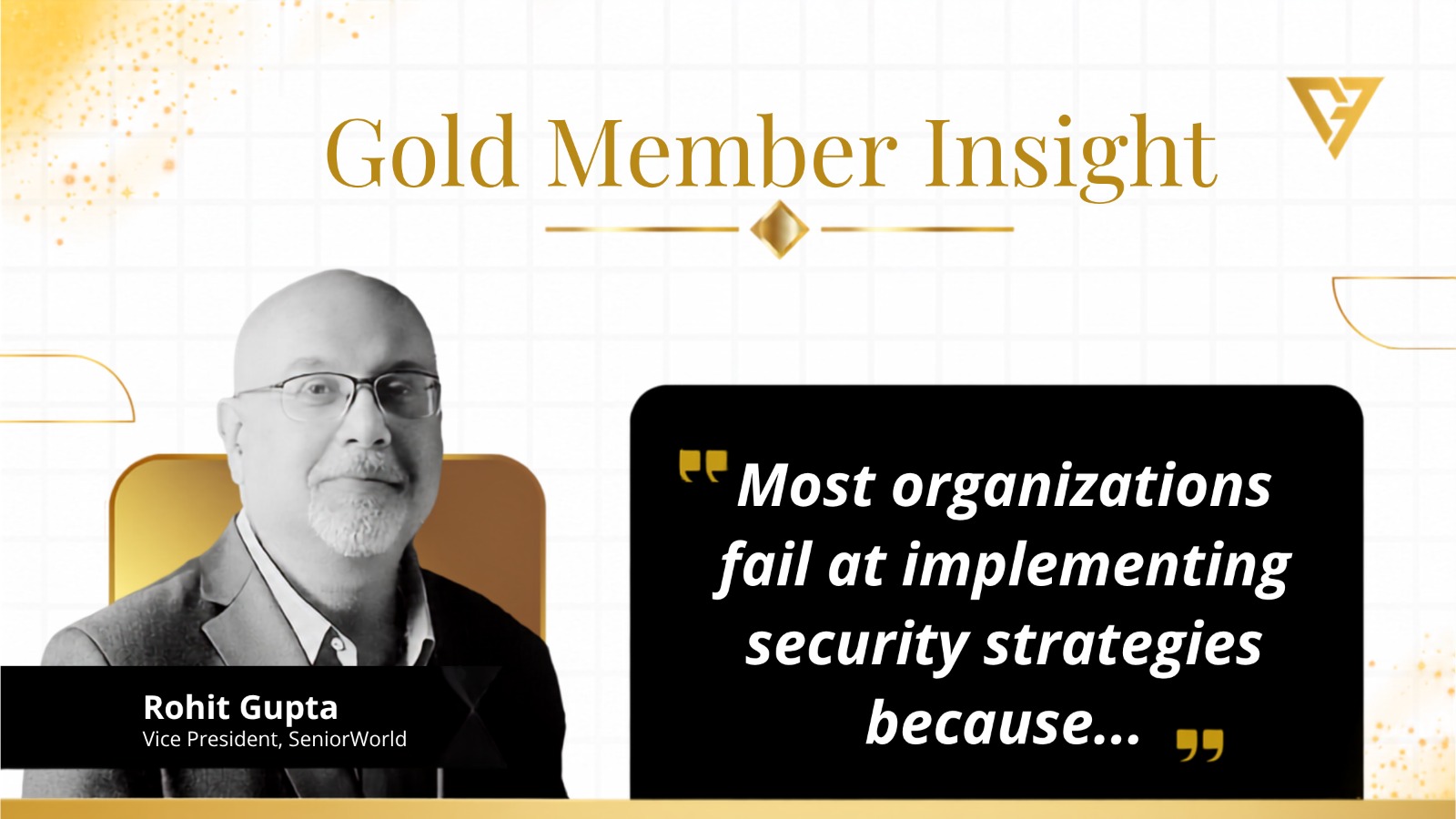
Gold Member Insights is our initiative to highlight the knowledge and experiences of our Gold Members. This feature captures Rohan Gupta’s perspective on Why Most Organisations Fail at Implementing Security Strategies, offering valuable takeaways for the cybersecurity community.
In today’s rapidly evolving digital landscape, organizations are investing heavily in cybersecurity strategies to protect their data, systems, and business operations. However, many organizations struggle not because they fail to design effective security strategies, but because they fail to execute, maintain, and evolve them over time.
A well-written cybersecurity strategy is only the beginning. The real challenge lies in turning that strategy into a sustainable security program that aligns with business goals.
Security Is a Business Risk, Not Just an IT Responsibility
One of the biggest reasons organizations fail at implementing security strategies is the mindset that cybersecurity is only an IT function.
When security is treated as an isolated technology concern rather than a business risk, it often lacks leadership involvement, accountability, and long-term ownership. Without support from senior leadership and the board, security initiatives struggle to receive the necessary resources and attention.
As a result, security budgets often compete with revenue-driven priorities, and during critical business decisions, security investments may take a back seat.
A Strategy Without Ownership and Governance Cannot Succeed
A cybersecurity strategy needs more than policies and documentation. For successful implementation, organizations require:
- Clear ownership across departments
- Defined roles and responsibilities
- Measurable security KPIs
- Strong governance frameworks
- Continuous monitoring and improvement
Without these elements, security strategies often remain as documents rather than becoming active programs that reduce risk.

The Disconnect Between Security and Business Growth
Another common challenge is the lack of alignment between cybersecurity strategies and business objectives.
Security initiatives should support:
- Business expansion
- Digital transformation initiatives
- Innovation and technology adoption
- Operational efficiency
When security is viewed as a barrier instead of a business enabler, teams may bypass security processes, creating additional risks for the organization.
Why Technology Alone Cannot Solve Security Challenges
Many organizations invest in advanced security tools expecting technology to solve their cybersecurity challenges. While tools are important, they are only one part of the solution.
Without:
- Skilled people
- Effective processes
- Leadership support
- Clear accountability
even the most advanced security solutions may fail to deliver the expected results.
Cybersecurity success depends on the combination of technology, people, and processes working together.

Building a Sustainable Security Culture
Security is not a one-time project or a compliance checkbox. It is a continuous process that must evolve with changing business needs, emerging threats, and organizational growth.
Successful organizations build security into their culture by making it:
- A board-level priority
- A shared responsibility across teams
- A measurable business program
- A continuously improving practice
Conclusion
Organizations don’t usually fail because they lack cybersecurity strategies. They fail when those strategies are not supported by leadership, governance, accountability, and business alignment.
A strong security program is created when cybersecurity moves beyond IT ownership and becomes a core part of business decision-making.
This insight is shared by our Gold Member, highlighting the importance of execution, leadership, and continuous improvement in building effective cybersecurity strategies.