
One Thing That Actually Works in a Cybersecurity & Risk Leadership Role - By Dr. Ram Kumar G
Introduction
Gold Member Insights is our initiative to highlight the knowledge and experiences of our Gold Members. This feature captures Dr. Ram Kumar G’s perspective on Why Most Organisations Fail at Implementing Security Strategies, offering valuable takeaways for the cybersecurity community.
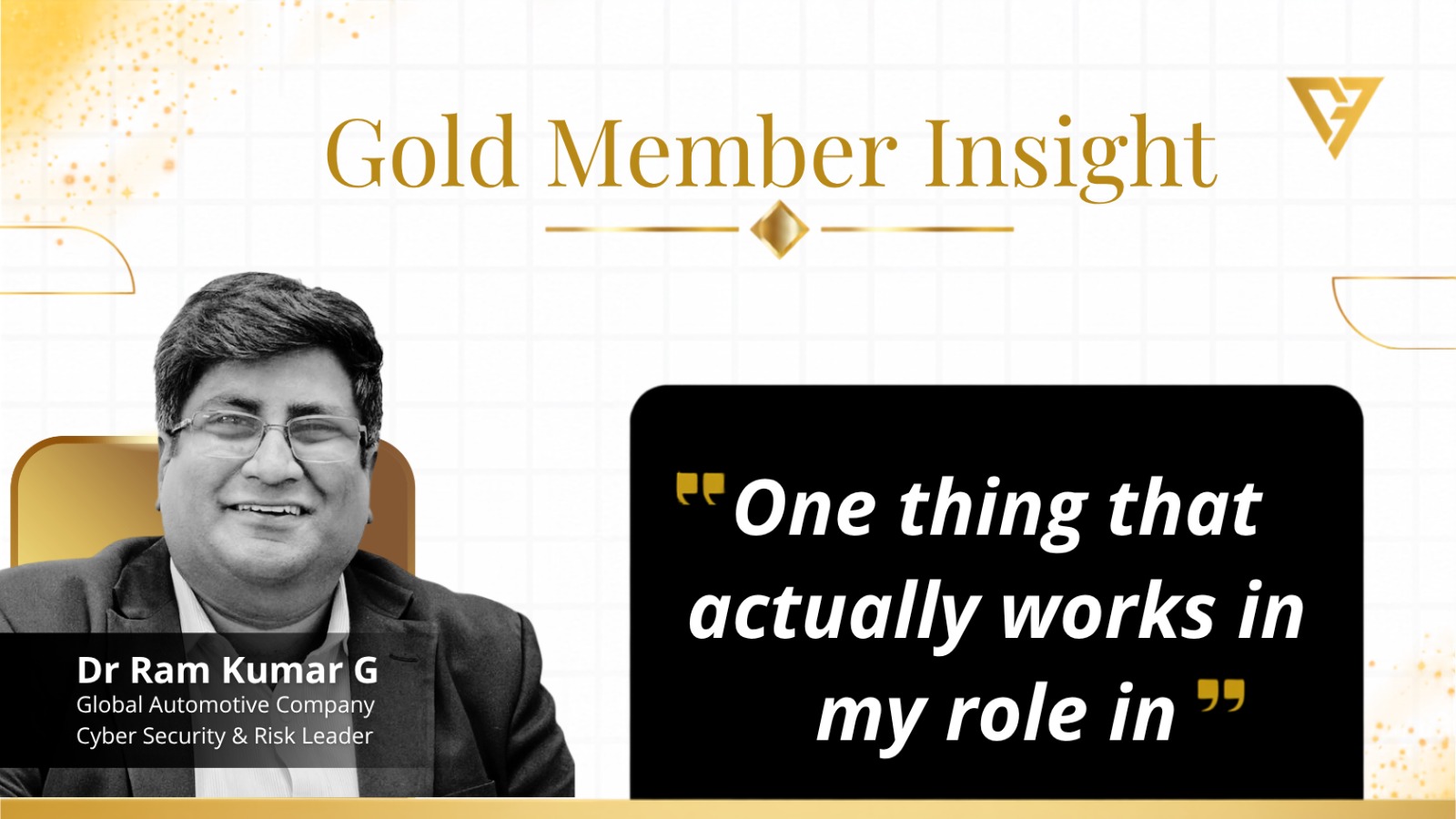
One thing that actually works in a Cybersecurity & Risk leadership role is treating human error as a system flaw to be engineered out, rather than a personal failure to be punished.
This mindset is fundamental to building organizations that are resilient, secure, and prepared to handle evolving cyber threats. While technology continues to advance, people remain at the center of every security strategy. Instead of asking “Who made the mistake?”, effective leaders ask “Why was it so easy for the mistake to happen?” This shift in perspective creates lasting improvements across the organization.
Shifts the Culture
Moving away from a “blame culture” encourages teams to report incidents early instead of hiding them.
When employees fear punishment for making mistakes, they are more likely to delay reporting incidents or avoid speaking up altogether. This can allow small security issues to grow into major incidents before they are detected. A culture built on trust and accountability empowers people to report suspicious activities, near misses, or accidental errors without hesitation.
Cybersecurity leaders who foster psychological safety create an environment where transparency becomes a strength rather than a risk. Early reporting enables faster response, minimizes damage, and ultimately strengthens the organization’s security posture.
Builds Resilient Systems
Designing guardrails around human behavior acknowledges that even the most well-trained people have off days.
No amount of awareness training can eliminate human error completely. Employees may click the wrong link, misconfigure a setting, or overlook a warning simply because they are under pressure or distracted. Effective cybersecurity leadership recognizes this reality and focuses on designing systems that reduce the likelihood and impact of these mistakes.
This includes implementing secure defaults, multi-factor authentication, automated checks, approval workflows, and intuitive security controls that make the secure choice the easiest choice. By engineering security into everyday processes, organizations become more resilient even when human mistakes occur.

Focuses on Root Causes
It forces us to ask why a mistake was easy to make, leading to better automation, clearer UX, and stronger defaults.
Rather than treating every incident as an isolated human failure, strong cybersecurity leaders investigate the underlying factors that contributed to the error. Was the interface confusing? Was the process unnecessarily complex? Could automation have prevented the issue? Were security controls difficult to follow?
Addressing these root causes leads to long-term improvements. Better user experience, intelligent automation, and thoughtfully designed systems reduce repetitive mistakes while allowing employees to work more efficiently and securely.

Final Thoughts
Cybersecurity is not just about defending technology—it is about enabling people to work securely. Leaders who treat human error as a design challenge instead of a disciplinary issue create stronger teams, healthier security cultures, and more resilient organizations.
The most effective cybersecurity and risk leaders understand that lasting security is achieved not by expecting perfection from people, but by building systems that are designed to support them.