
Why Expensive Security Tools Often Fail to Deliver Expected Results?
Introduction
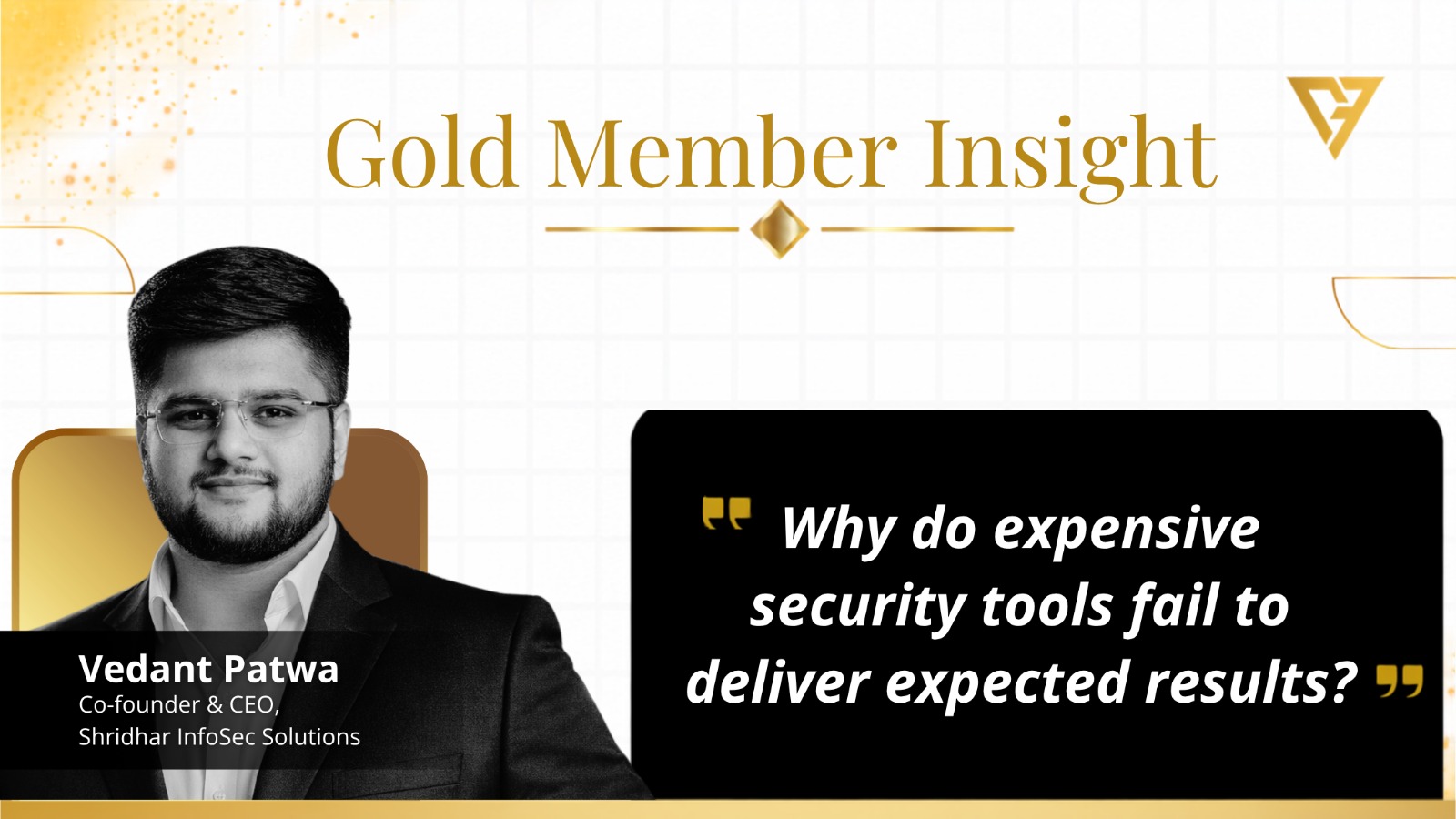
Gold Member Insights is our initiative to highlight the knowledge and experiences of our Gold Members. This feature captures Vedant Patwa’s perspective offering valuable takeaways for the cybersecurity community.
Organizations today invest heavily in advanced cybersecurity solutions, expecting them to strengthen their security posture. However, despite deploying expensive security tools, many still struggle with security incidents, poor visibility, and underwhelming outcomes.
According to CyberFrat Gold Member Vedant Patwa, the issue isn’t the technology itself, it’s how organisations implement and manage it.
The Tool Isn’t the Problem
After years of working with security environments, Vedant has observed a common pattern: organizations often purchase security tools before fully understanding their own infrastructure.
Before implementing any solution, it’s essential to identify:
What assets need protection.
Where the organization’s biggest risks lie.
How data flows across the environment.
Which security gaps actually need to be addressed.
Without this foundational understanding, even the most advanced security platform becomes another expensive investment that delivers limited value.

Deployment Is Only the Beginning
Another common challenge is what happens after deployment.
Many organizations install a security tool, configure the basic settings, and leave it running with default configurations. Over time, the platform receives little tuning, minimal ownership, and poor integration with existing security operations.
Instead of becoming an active part of the organization’s security strategy, it gradually turns into another dashboard that’s checked occasionally rather than used to drive meaningful security decisions.
Why This Happens
Buying a security tool often feels like measurable progress. It’s a visible investment that demonstrates commitment to cybersecurity.
However, the real value comes after the purchase.
Making a security platform effective requires continuous monitoring, customization, integration, regular tuning, and dedicated ownership. These operational efforts are far less visible than the purchase itself, yet they determine whether the investment succeeds or fails.
The Real Measure of Success
Technology alone cannot secure an organization.
A well-understood environment, supported by properly configured and actively managed security tools, will consistently outperform expensive solutions that are deployed without a clear strategy.

Final Thoughts
As Vedant Patwa emphasizes, successful cybersecurity isn’t about owning the most expensive tools, it’s about understanding your environment and ensuring those tools are aligned with your organisation’s security objectives.
The best security tool is not necessarily the costliest one, it’s the one that’s implemented, managed, and optimized effectively.